What if We Just… Made Billionaires Fix Their Companies to Avoid Taxes?

The honest conversation I had we a few PM’s about wealth taxation

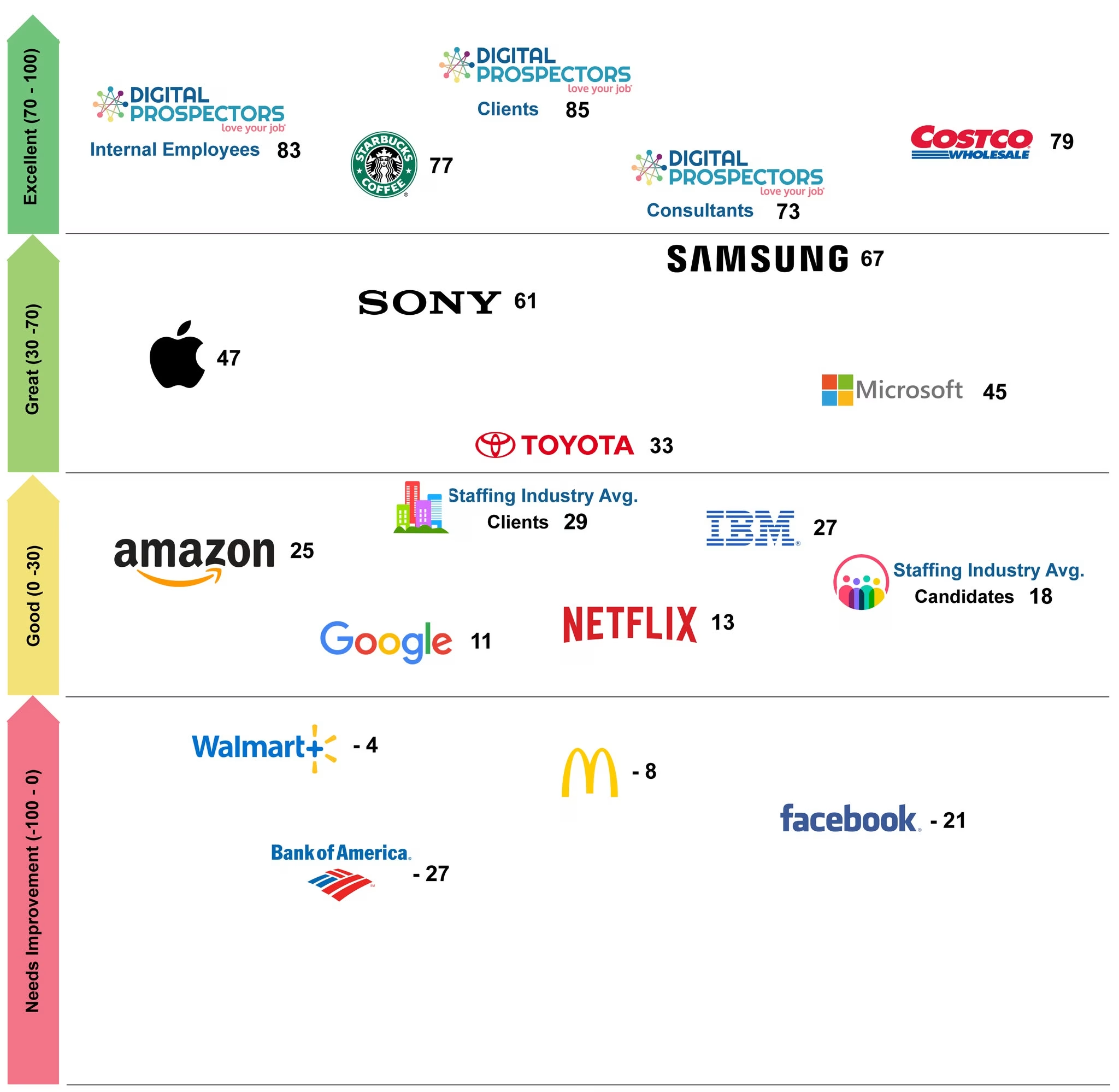
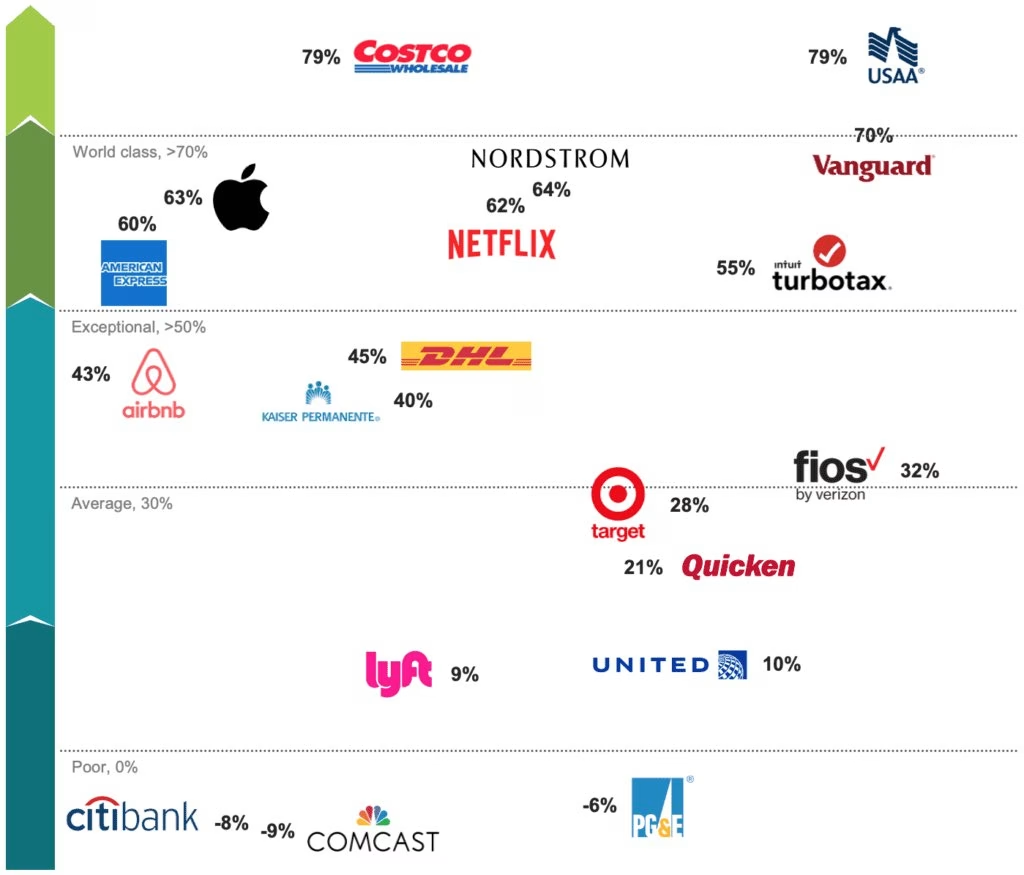
What if we taxed billionaires based on whether people actually like their products?

Like, legitimately. High customer satisfaction = tax break. Terrible customer experience (looking at you, Comcast) = hefty wealth tax.

My first reaction? “Oh no, that’s ridiculous.” My second reaction? “Wait… why isn’t this already a thing?”

Here’s the Actual Proposal

The core idea is dead simple:

You’re a billionaire who created something people genuinely love? → Congratulations, you get a wealth tax exemption.

Your company has the customer satisfaction of a colonoscopy clinic? → You’re paying a heavy wealth tax.

You got rich by exploiting regulatory loopholes, crypto schemes, or SPAC manipulation? → Yeah, definitely paying the tax.

It sounds funny until you realize what it actually does: it completely reframes wealth taxation. Instead of just asking “how much money do you have?”, it asks “did you actually create something people wanted, or did you just extract value?”

Why This Actually Landed

We all know the difference between:

  • Steve Jobs creating a product people lined up outside stores to buy
  • A telecom executive creating a monopoly nightmare

But tax code doesn’t care about that distinction. They both get the same treatment.

One person builds something that improves millions of lives. Another person uses aggressive lobbying and legal gray areas to lock customers into a service they hate. But as far as the IRS is concerned? Same wealthy person.

What if we incentivized the first person and punished the second person?

The Genius Unintended Consequence

Here’s what made me laugh. Y said: “Oh no, then companies will just improve their customer service to avoid the tax!”

And everyone’s response? “OH NO!!!”

Because if that happened… would that be so bad? Like genuinely, if billionaires started obsessing over customer satisfaction to avoid wealth taxes, would we be worse off?

Imagine if Jeff Bezos woke up tomorrow thinking, “Actually, maybe paying my warehouse workers more and treating them better would lower my tax burden.” Or if Comcast suddenly realized they could save millions in taxes by… making their customer service not actively hostile.

It’s almost like the system would optimize for human happiness by accident.

The Problems Are Actually Legit Though

But it’s not all fun and games. The criticism gets real fast.

First problem: Who decides what’s good? NPS (Net Promoter Score) can be gamed. Like, aggressively gamed. Companies manipulate survey data all the time. Give billionaires a financial incentive to cook the books on customer satisfaction, and they absolutely will.

Second problem: Different industries are just built different. Airlines will never have high customer satisfaction because flying is inherently miserable. You’re packed in a metal tube, your knees are at your ears, and the person in front of you reclined their seat. No amount of good service changes that.

Industries like Costco naturally perform well because people love shopping there. But compare that to a utility company – people don’t get joy from their electric bill, even if the service is actually excellent. The metrics don’t transfer across industries.

Third problem: The philosophical one. Who gets to decide what’s a “scam” versus what’s just aggressive business? Crypto is a great example, but is every crypto founder a scammer? Is every SPAC a con? The line gets blurry real fast, and you’re essentially handing government the power to judge business morality.

And “Then… who watches the watchmen?” Because the bigger your power to judge others, the more corrupting that power becomes. You can imagine exactly how this gets weaponized.

But Like, Is It Actually Wrong Though?

Here’s what’s been rattling around in my head since then:

We already assume that how you make your money matters. That’s why Ponzi schemes are illegal but regular business isn’t. That’s why we care about insider trading but not regular trading. We already think some ways of getting rich are more legitimate than others.

This idea is just asking: what if we actually designed a system around that belief?

And maybe the question is less “is this the perfect system?” and more “is the current system actually working?”

Because right now? If you’re ruthless enough, you can absolutely get richer by making worse products. You can extract maximum value from customers, pay workers less, cut corners, and pocket the difference. The system doesn’t penalize you for that at all.

The Practical Nightmare

To actually implement this, you’d need:

  • Independent measurement: Not some corporate survey you control. Third-party audited NPS scores, industry adjusted.
  • Clear thresholds: No ambiguity. If you hit this number, you get this tax rate. Done.
  • Anti-gaming provisions: Serious penalties for cooking survey data.
  • Industry adjustments: Utility companies and airlines aren’t Costco. You can’t use the same benchmarks.
  • Regular updates: Markets shift. What counts as good service changes. You’d need quarterly or annual reassessments.

Is that complicated? Yeah. Is it impossible? Not really. We regulate way more complex stuff.

The Real Question

What we really did was ask something uncomfortable: What if we structured incentives so that the easiest way to become a billionaire was to create something people actually wanted?

Because right now, the easiest way to become a billionaire is often to exploit information asymmetries, regulatory gaps, or customer complacency. You can get wildly rich by being average at making products and excellent at extracting value.

A satisfaction-based tax structure would flip that. Suddenly, if you want to hoard billions, you have to actually care whether your customers like you.

Is it perfect? No. Would it get gamed? Probably. Would it create weird incentives in some industries? Definitely.

But would it be worse than what we have now? That’s the question we’re not asking loudly enough.

So What Do We Actually Do?

Here’s the honest answer: I don’t know if NPS-based wealth taxation is the solution. But I know the problem is real.

We have a system that doesn’t distinguish between wealth created through innovation and wealth extracted through exploitation. We have billionaires with worse customer satisfaction than government agencies, and we’re cool with it.

Maybe the answer isn’t exactly this. Maybe it’s adjusting how we measure wealth creation. Maybe it’s carbon taxes or labor compliance taxes or customer satisfaction bonuses.

But the core insight is right: we should probably care about how someone got rich, not just how much they’re worth.

So yeah. NPS-based wealth taxes might not be the answer. But it’s worth asking the question.

And maybe – just maybe – the real genius is that asking the question, out loud, is what actually changes things.

Photo by Ron Lach : https://www.pexels.com/photo/senior-man-separated-with-red-line-from-pc-screen-displaying-discriminating-inscription-9831612/